

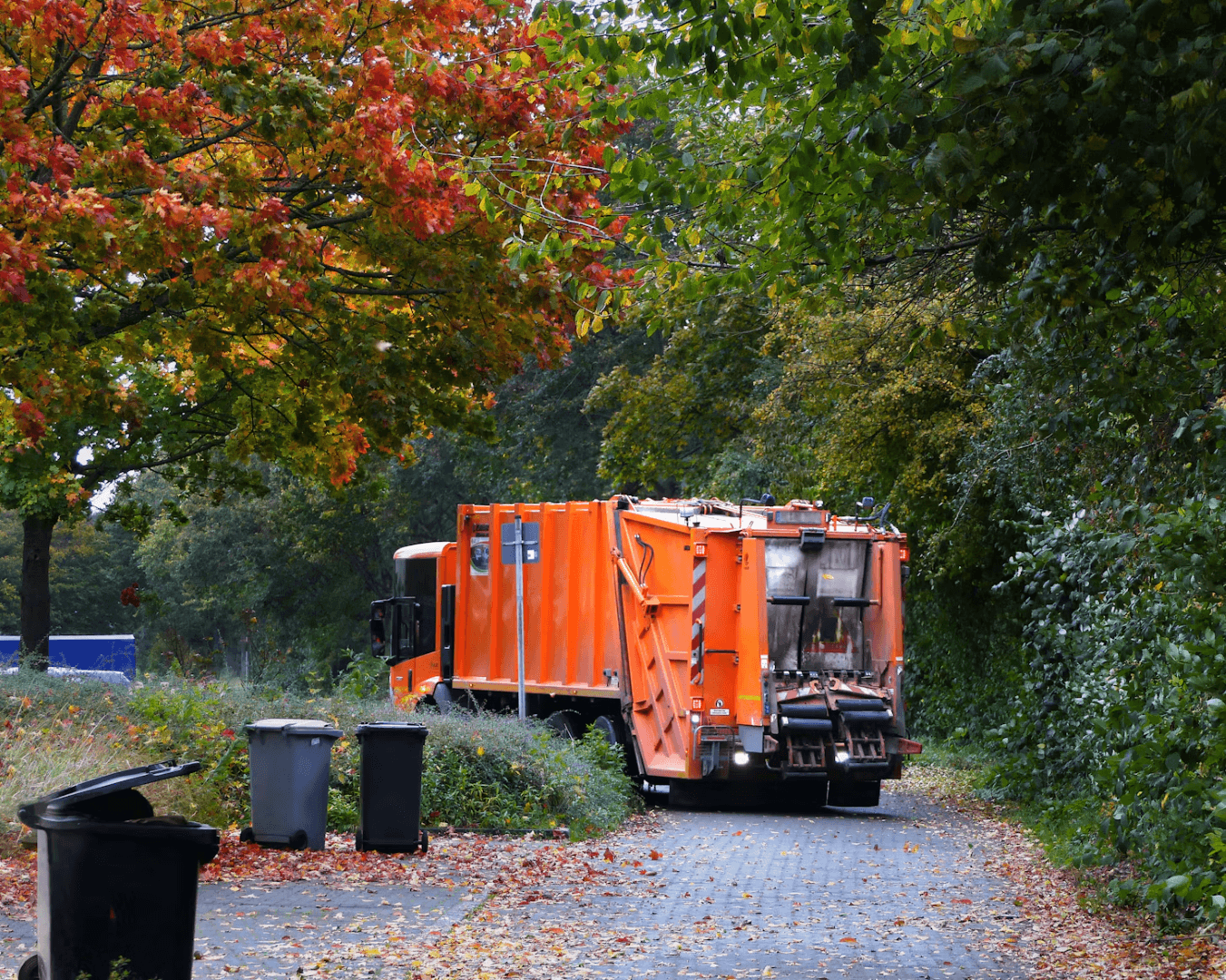
At 4.45am on 13 October, a garbage truck caught fire during a routine kerbside collection in North Bega. The suspected cause was a dumped battery, with discarded aerosol cans feeding the flames. The driver tipped the burning load onto the street, saving the truck, and Fire and Rescue NSW put out the fire.
It was not an isolated case. A similar truck fire happened at Merimbula on 5 August, Shoalhaven Council has dealt with several collection fires (the latest in September), and Eurobodalla Shire Council reports household batteries sparking at least one fire a month at its waste facilities.
Those are kerbside stories, but the same risk sits inside apartment buildings, commercial towers and mixed-use developments. Residents and tenants drop rubbish down chutes, into bin rooms and into compactors every day, and a damaged lithium battery in that stream has no kerb to be tipped onto. For building managers, strata committees and facilities teams, battery fires are a risk to plan for, not just a council problem.
This guide explains how to dispose of lithium batteries safely in a building: why they ignite in waste equipment, where they hide, what building managers can do, and what to tell residents.
Fires started by batteries in the waste stream are now a recurring pattern in every state where we work, not a run of bad luck.
Every one of those loads was filled somewhere first. In a multi-unit building, that somewhere is a bin room, a chute discharge or a compactor, which is where building managers have the most control.
A lithium-ion battery does not have to be faulty to start a fire; damage alone is enough. When waste is compacted, the pressure can rupture a battery’s internal components, causing a short circuit that overheats the cell and ignites the paper and plastic around it, as local reporting on the North Bega fire explained. Shoalhaven Council says crushed or punctured batteries can ignite with no warning.
These fires are also harder to deal with than ordinary bin fires. NSW authorities describe battery fires as burning hotter and spreading faster than regular fires. At North Bega, the suspected battery was joined by discarded aerosol cans, which amplified the flames.
A garbage truck is only one place where waste gets crushed. Inside a building, a battery can be damaged at several points:
Many of the lithium-ion batteries that reach a building’s bins are inside products residents do not think of as battery items. Queensland Fire Department data points to e-bikes, e-scooters, vapes, cordless tools and household electronics as common sources.
Battery fires are rarely the only hazard in a load. Knox City Council lists aerosol cans that are not empty, gas bottles, butane cans, household chemicals and petrol or other accelerants as items that should never go in a bin.
You cannot inspect every bag, but you can make batteries less likely to arrive, less likely to be damaged and easier to catch if something goes wrong.
Most residents do not connect a dead vape with a fire, so the message has to be where they throw things away. Clear signs at chute doors and bin rooms that say no batteries, vapes or aerosol cans will do more than an annual notice. Add the same rule to welcome packs, newsletters and strata communications. Our consulting team develops best practice guidelines and educational strategies for waste systems, and can help tailor resident messaging to your building.
Check that chute doors close and latch correctly, that bin rooms are clear of clutter and that the room’s fire safety equipment is current. A chute door inspection can pick up wear before it becomes a problem, and a walk through the bin room is a good time to look for dumped batteries, vapes and aerosol cans.
Compactors and balers are where waste is crushed on purpose, so they deserve extra attention. Regular baler and compactor service keeps equipment in safe working order. Make sure staff and cleaners also know what to do if they see smoke or heat coming from a bin or machine: raise the alarm and follow the building’s emergency procedures.
Battery risk fits naturally into a preventative maintenance programme. Add a regular check for signs of dumped batteries, review whether signage is still in place and readable, and record what you find so patterns show up early.
A dedicated battery collection point, such as in a lobby, mailroom or bin room, gives residents an easy alternative to the chute. It only works if a battery recycler then collects what is in it, so ask your recycler which container type they require before you buy anything. We offer customisation options for bins and containers, including size, configuration and additional features, so talk to us about what could suit your site.
To dispose of lithium batteries in Australia, residents need two simple instructions: how to store old batteries safely, and where to take them for recycling. Both fit on a poster, a lift noticeboard or a one-page notice.
Council advice reported by the South Coast Register is to keep old batteries in a cool, dry place, such as a glass jar with the lid off. Keep them away from metal objects, and put clear sticky tape over the terminals to prevent accidental sparks. Bega Valley Shire Council gives the same taping advice.
The NSW EPA’s Never Bin a Battery campaign also encourages households to use free drop-off points instead of the bin.
Damaged, swollen or leaking batteries, and large e-bike or e-scooter packs, may need different handling from small household batteries. Residents should contact their council or the drop-off point before transporting them.
Batteries will keep turning up in building waste, so the goal is to manage the risk, and we help building managers do that across New South Wales, Victoria and Queensland. Since 1976 we have designed, engineered and maintained waste systems, and our group covers chutes, equipment, consulting and 24/7 service.
Depending on your building, we can help you:
Ask us about a battery risk review for your workplace, school or strata building, or about options for a safe battery collection bin. Call us on 1300 435 374 or email info@elephantsfoot.com.au.
This guide is general information only. For fire safety requirements specific to your building, speak to your fire engineer or certifier.
Never put them in a chute, a general waste bin or a recycling bin. Tape the terminals, store them in a cool, dry place and take them to a free drop-off point, such as a supermarket battery bin or a council facility.
Small lithium-ion batteries from items such as phones and cordless tools usually go to the same retail and council drop-off points, so check what each point accepts. Large e-bike or e-scooter packs and damaged batteries may need different handling, so check with your council first.
No. Crushing in a garbage truck, a chute bin or a compactor can cause a short circuit and a fire. Councils in New South Wales, Victoria and Queensland all give the same warning.
Start with your local council’s website, which lists its own drop-off points, or use the B-cycle drop-off finder, which covers supermarkets and hardware stores.
Embrace the values of respect, diversity, and community by joining us in promoting a more sustainable and inclusive future through Elephants Foot’s dedication to the RAP Plan.





